
The rhythm of New York is fast, fierce, and full of life — but it can also be relentless. Between work deadlines, crowded commutes, and sensory overload, the body and mind often carry more tension than we realize.
At Flora Healing Bodyworks, we see daily how stress shows up — in the jaw, the neck, the breath, and even the skin. While acupuncture, massage, and other body-based therapies can be powerful tools for release, true balance often comes from a combination of lifestyle practices and intentional pauses woven throughout the day.
Here are ten accessible ways New Yorkers are learning to unwind, reconnect, and regulate — both inside and outside of the treatment room.
1. Slow Your Commute
New York mornings are notorious for setting the day’s tone — but what if your commute became part of your mindfulness practice? Try leaving five minutes early so you can walk at a slower pace, noticing the rhythm of your breath and the sensation of your feet on the ground.
Instead of reaching for your phone on the subway, listen to calming music, a short meditation, or simply close your eyes and take three long, grounding breaths. Those few moments can lower cortisol levels and set a more centered foundation for your day.
2. Breathe Like You Mean It

Stress constricts everything — muscles, digestion, thoughts, and especially breathing. One of the simplest yet most powerful ways to reset your nervous system is to breathe deeply and intentionally.
Try this exercise anytime you feel overwhelmed:
- Inhale through your nose for four counts
- Hold for two
- Exhale slowly through your mouth for six counts
This gentle pattern activates the parasympathetic nervous system (your “rest and digest” mode), releasing tension before it spirals into physical pain or mental fog.
3. Create a Screen Sunset
Digital overload is one of the modern city dweller’s biggest stressors. Constant notifications keep our nervous systems wired for action long after work hours are done.
Choose a nightly “screen sunset” — a time when you stop checking your phone or emails. Dim the lights, play soft music, and allow your body to transition toward rest. Even 30 minutes of screen-free time before bed can improve sleep quality and emotional regulation.
4. Move Gently, Move Often
You don’t have to hit the gym for an hour to relieve stress. Small, mindful movement throughout the day can shift your energy dramatically. Try gentle yoga stretches at your desk, a quick walk around the block, or even a few shoulder rolls between meetings.
These micro-movements release physical stagnation — the same principle behind acupuncture for neck and shoulder pain, which focuses on restoring flow and balance in areas that tighten from stress. The key is consistency, not intensity.
5. Drink Water Like It’s Medicine

When life gets busy, hydration is the first thing to go — yet dehydration can mimic symptoms of anxiety and fatigue. Keep a reusable water bottle with you and sip throughout the day, not just when you feel thirsty.
You can also “upgrade” your hydration ritual: add a squeeze of lemon in the morning, or a few mint leaves in the afternoon for a sensory reset. Think of every sip as a small act of self-care.
6. Release Tension from the Body
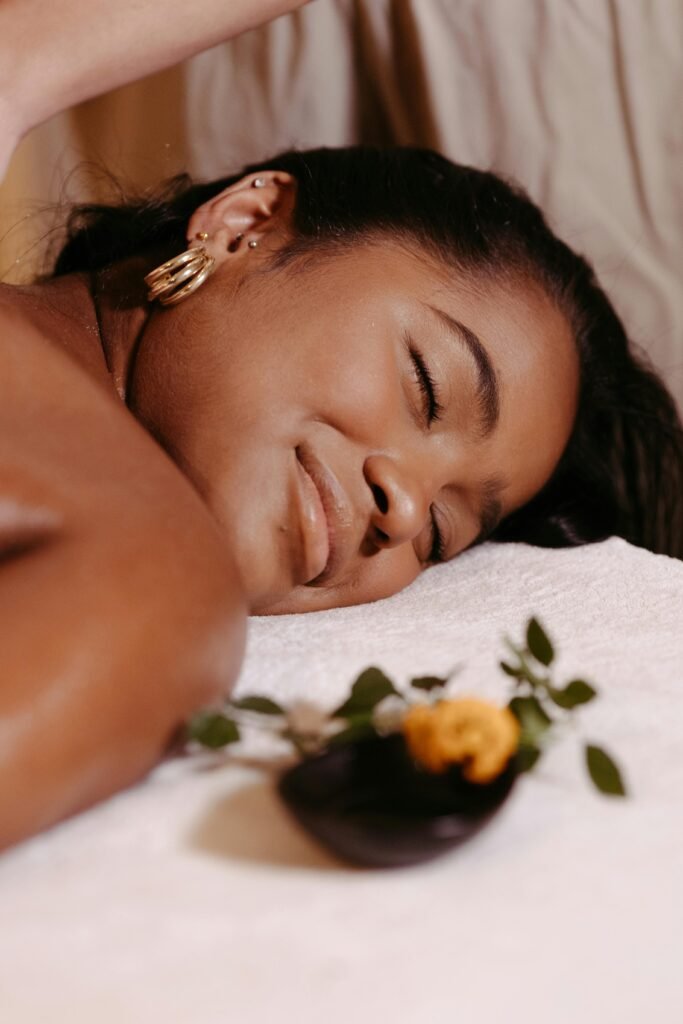
Stress that isn’t expressed gets stored — often in the muscles, fascia, and breath. Somatic release practices like stretching, shaking, or cupping therapy can help move stuck energy through the body so it doesn’t linger as pain.
Other options include self-massage, foam rolling, or simply placing a warm compress on tight areas like the neck or jaw. If your body has been in “holding mode,” these small moments of attention tell it: You’re safe now. You can let go.
7. Protect Your Lymph Flow
The lymphatic system is your body’s internal drainage network — and when it’s sluggish, you might feel puffy, tired, or mentally foggy. Gentle lymphatic massage or dry brushing at home can encourage circulation and detoxification.
To support lymph flow daily:
- Move your body (even a short walk helps)
- Stay hydrated
- Practice deep breathing (the diaphragm acts as a lymph pump!)
- Avoid sitting for too long without stretching
Healthy lymph flow doesn’t just benefit your immune system — it lightens your physical and emotional load.
8. Soften Your Face and Jaw
Many people don’t realize how much emotion gets stored in the face — especially the jaw, temples, and forehead. Whether you’re clenching through work or grinding your teeth at night, this area deserves care.
Try a gentle gua sha facial at home or schedule acupuncture for TMJ to help release jaw tension and restore balance. You can also massage along your cheekbones or behind your ears in small circular motions to ease pressure and calm the mind.
Bonus: your skin will glow when your facial muscles relax.
9. Regulate Your Inner Weather

Stress isn’t just about what’s happening around you — it’s about how your body interprets those experiences. Techniques like meditation, journaling, and gratitude practice can help retrain your internal responses to external stressors.
Acupuncture and moxibustion can also support emotional regulation by warming, nourishing, and balancing your energy flow. But so can a quiet walk through Union Square Park, sitting on a bench with sunlight on your face, or calling a friend who makes you laugh.
The key is to give yourself permission to pause.
10. Ask for Support
Sometimes stress runs deeper — through patterns of trauma, grief, or chronic anxiety. You don’t have to navigate that alone. Whether through therapy, community circles, or holistic modalities like acupuncture for anxiety and acupuncture for PTSD, healing begins when we allow ourselves to be supported.
At Flora Healing Bodyworks, we often remind clients that self-care isn’t selfish — it’s an act of collective care. When you tend to your own nervous system, you contribute calm energy back into the world around you.
The Mind–Body Connection Is Real
Stress may start in the mind, but it often ends in the body. Tight shoulders, jaw clenching, shallow breathing, and fatigue are all physical signals asking for attention. When we meet those signals with curiosity instead of resistance, healing begins to unfold naturally.
Scientific research continues to show that body-based therapies like acupuncture, acupressure, and massage can lower cortisol, reduce inflammation, and improve overall mood regulation. But just as powerful are the small, consistent rituals of mindfulness, breath, and movement that weave calm into daily life.
Building a Sustainable Calm
The truth is, you can’t remove stress entirely — especially in a city that thrives on motion. But you can transform how you relate to it. Each mindful breath, gentle stretch, and intentional pause reminds your body that peace is possible even in chaos.
The best wellness routine is the one that fits your lifestyle. Maybe that’s a few deep breaths before bed, a lymphatic massage at Flora Healing Bodyworks, or just remembering to unclench your jaw during your commute. Over time, these small actions build resilience — not because stress disappears, but because you learn to move through it with grace.
Whether your stress shows up as tension, fatigue, restlessness, or disconnection, remember this: your body already knows how to heal. Sometimes it just needs space to remember.
At Flora Healing Bodyworks, we’re honored to hold that space — but the most powerful healing often starts in the simplest moments of awareness. Breathe deeply. Move gently. Drink water. Step outside. And let your body lead the way back to balance.